
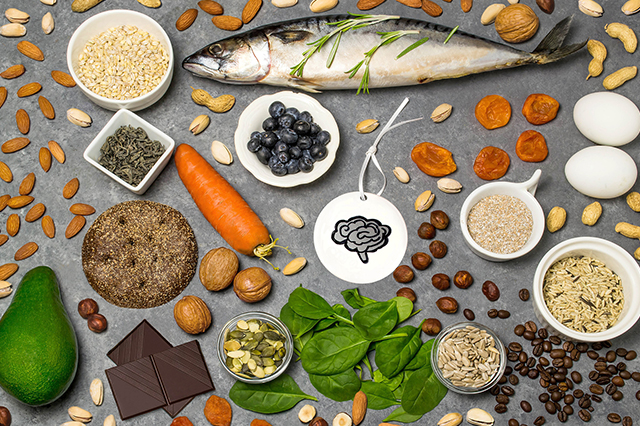
Getting the right balance of vitamins and minerals is important for a healthy lifestyle. We discuss the best ways to do so.fruit and vegetables age (an apple in a bowl loses vitamins hour by hour), and modern processing techniques have considerably reduced the vitamin and mineral content of many foods.
Vitamins are essential substances that cannot be manufactured by the body. We need small amounts of vitamins for growth and development. Without vitamins the body cannot survive.
Fat-soluble vitamins (A, D, E and K) are usually found in meat and meat products, animal fat and vegetable oils, dairy products and fish. They are transported around the body in fat, and your body stores any excess in the liver and fatty tissues. This means you don't need to get them from food sources every day.
Water-soluble vitamins (B, C, folic acid) are found in meat, fish, fruit, vegetables and wholegrains. They are transported around the body in water. This means your body can't store them because you pass the excess through urine. You need to eat foods containing these vitamins every day. Water-soluble vitamins can be destroyed by cooking – so steam and grill rather than boil.
We all need vitamins to live a long and healthy life, and a varied diet is essential if we are to obtain the nutrients we need.Plenty of foods naturally contain vitamins. Some popular foods, such as breakfast cereals, are fortified with vitamins and minerals.That said, it is not always easy: fruit and vegetables age (an apple in a bowl loses vitamins hour by hour), and modern processing techniques have considerably reduced the vitamin and mineral content of many foods.Try to eat a wide variety of fresh foods. Frozen vegetables are also a good option: they can often contain more vitamins than vegetables stored for a long time at room temperature.
What problems can vitamins cause :
But taking too many vitamins can also be dangerous. This is especially true of the fat-soluble vitamins A, D, E and K because it's harder for the body to get rid of any excess through urine – the most common way to eliminate waste products.
Which vitamins do we know about? :
New vitamins are discovered occasionally, but we know of the following: A, B1 (thiamine), B2 (riboflavin), B3 (niacin), B5 (pantotheinic acid), B6 (pyridoxine), B7 (biotin) B9 (folic acid), B12, B13, B15, B17, C, D, E, G (riboflavin), H (biotin), K and M (folic acid).
Although other substances are often referred to as vitamins, eg vitamin B10, vitamin F, vitamins K, M, P, T and U, these have now been shown not to be vitamins as such or to be similar compounds to already known vitamins.
Vitamin A comes from fish liver oil.Vitamin B comes from yeast or liver.Vitamin C is often extracted from rosehips.Vitamin E is extracted from soy beans or maize.Vitamins may also be synthetically manufactured, but synthetic vitamins may not always be as effective as their naturally-derived equivalent.
Keep supplements in a dark, cool place or they will 'go off', just like apples in a bowl.The best place to store vitamins is in the refrigerator – make sure there is a lid on the container.A few grains of rice in the container will prevent moisture getting into the tablets.
Never take supplements on an empty stomach – they will quickly pass out in your urine. This is especially true for the B and C vitamins that dissolve in water.
The fat-soluble vitamins A, D, E and K can be stored in the body for up to 24 hours and are sometimes stored in the liver for even longer.
© 2025 vitaminpurehealth. All rights reserved